Skip to content
Xsystems

Focus area

Workplace acoustics.

Noise is rarely the first thing people complain about. They say they are tired, that they can't concentrate, or that meetings are draining. We can measure reverberation and noise levels in the room, find out where the sound lingers, and dampen it where it actually makes a difference.

Acoustic panels installed in an open office environment

What we hear most.

Four situations that are almost always about acoustics.

  • People can't concentrate in the open-plan office

    Conversations three desks away are as clear as the one next to you. The brain can't help listening in, and tasks that need focus take longer.

  • Meetings and phone calls are draining

    When the reverberation time is too long, syllables blur together. Everyone speaks a little louder, which raises the noise level even more — the classic cocktail party effect.

  • Headaches and fatigue late in the day

    Constant background noise below the regulatory limits does not damage hearing, but it wears people down. Fatigue typically sets in a couple of hours before the end of the workday.

  • The room looks right but sounds wrong

    Glass walls, drywall ceilings, concrete floors and few textiles are a common combination in new buildings. The look is fine — there is just nothing to absorb the sound.

Our approach

Measurement before materials.

We don't sell acoustics as a package. We find out what is making noise, where and when — and we only recommend what makes a difference.

  1. 01

    We can measure in the room that matters

    Reverberation time, background noise level and speech intelligibility are assessed at the desks where people actually sit — not in the middle of an empty room.

  2. 02

    We find the cause before the solution

    Sometimes the problem is hard surfaces. Other times it is the ventilation, a printer or a zone layout that doesn't fit the work. A panel on the wall won't fix the latter.

  3. 03

    We dampen where the area does the most

    Absorbers placed correctly on the ceiling and on the first reflection surfaces give far more effect per square meter than panels spread evenly across every wall.

  4. 04

    We follow up after installation

    After installation we assess the room again, so you have something concrete to record in your workplace assessment (APV) required by Danish law — not just a feeling that things have improved.

Reverberation and room damping

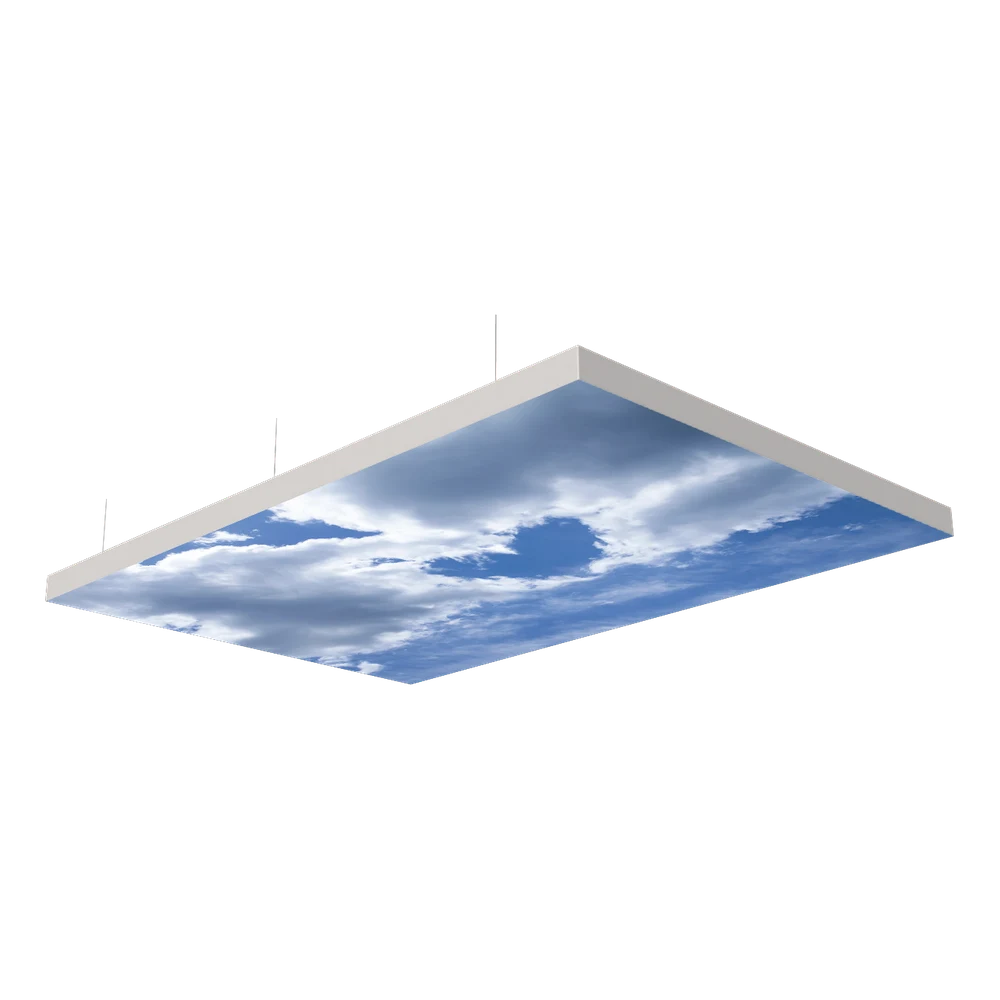
Reverberation time is how long it takes for sound to die out in a room. In offices it should typically be below 0.6 seconds, and lower in classrooms. Ceiling absorbers and ceiling frames are usually the first and most effective measure, because the ceiling is the largest unbroken surface in the room.
Zoning in open offices

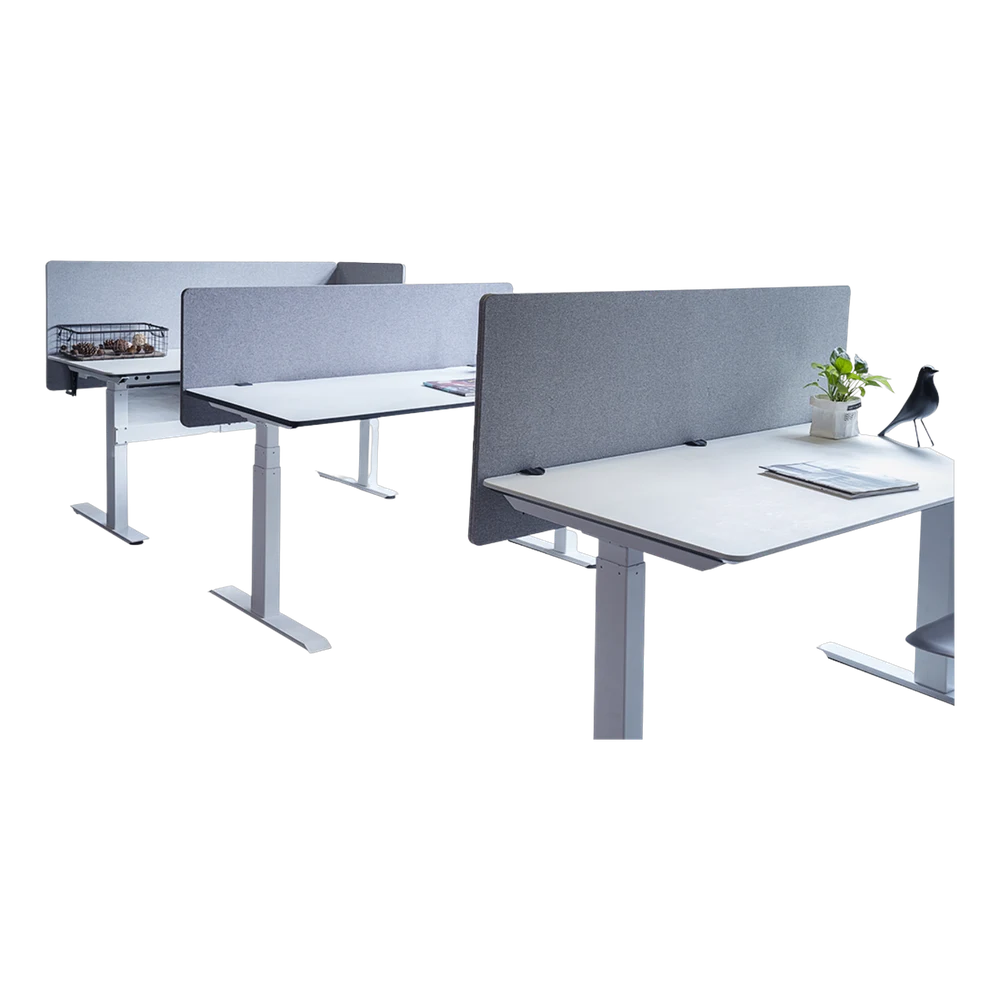
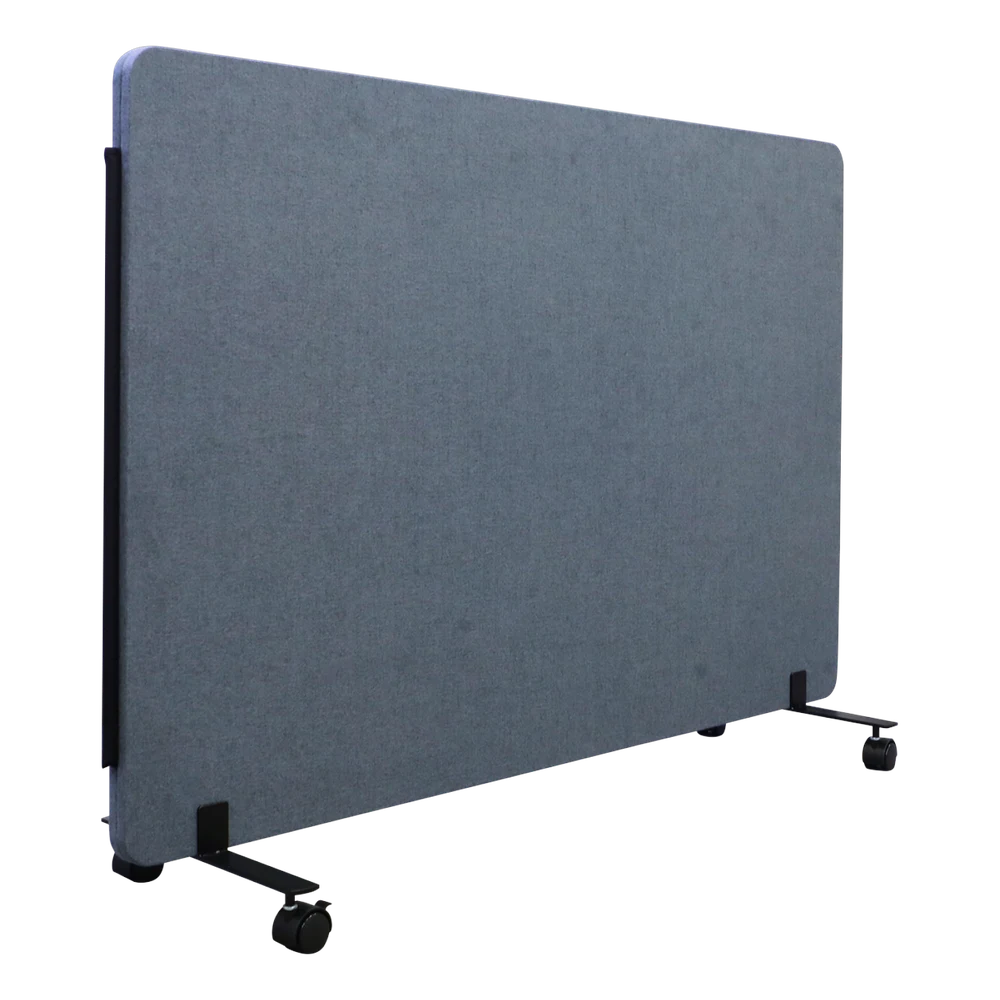
Open offices work when quiet work and conversation don't share the same air space. Fabric-covered panel walls and floor panels create physical and acoustic divisions without closing off the room — and they can be moved when the department grows.

Meeting rooms and phone rooms

Small rooms with parallel, hard walls produce flutter echo and make online meetings tiring. Absorbers on opposite surfaces and behind the speaker's position solve this with relatively little material.

Acoustics that don't look like acoustics

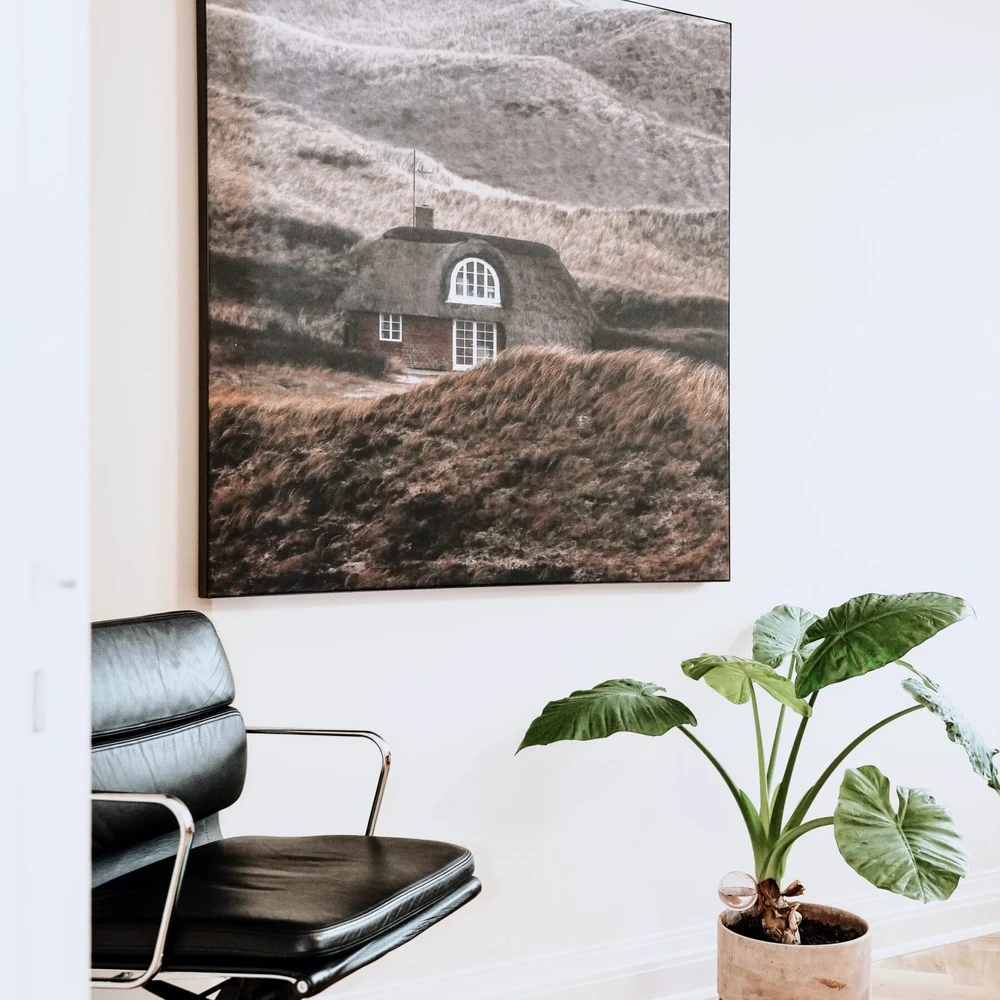
Absorbers can be printed with your own design or chosen in muted colors, so the solution can hang in the reception area and not just in the utility room. The material is recycled plastic fiber with a cotton cover.

Schools and institutions

Children talk over each other, and the rooms are often hard. Here acoustics is as much about helping teachers and childcare staff get through the day as about children hearing the message the first time.

Documentation

What research says about acoustics.

We rely on the same sources as the rest of our advice: the National Research Centre for the Working Environment (NFA), the knowledge portal godtarbejdsmiljo.dk from BFA (the Danish sector working environment councils), and the rules of the Danish Working Environment Authority.

  • Below the Danish limit

    Noise does not have to be loud to do harm. Even low-level noise disrupts work that requires concentration and can cause fatigue, difficulty concentrating and stress — even when the level is far below the formal limit values in Denmark.

    godtarbejdsmiljo.dk · Facts about noise in the workplace

    See the source
  • Since 1911

    The Lombard effect is well documented: in rooms with poor acoustics, everyone automatically raises their voice to be heard over the background noise — and the noise level escalates on its own. That is why the room's acoustics are the cause, not people's behavior.

    godtarbejdsmiljo.dk · Facts about noise in the workplace

    See the source
  • Most exposed

    Childcare workers, schoolteachers and nurses are among the occupational groups most disturbed by noise in the survey Work Environment and Health in Denmark by the National Research Centre for the Working Environment (NFA). In children, high noise levels can hinder both learning and language development.

    NFA · Work Environment and Health in Denmark

    See the source
  • Disturbance, not noise

    In a project on annoying noise in open-plan offices by the National Research Centre for the Working Environment (NFA) and COWI, what mattered was that the sound disturbs — not how loud it is. Workplaces found solutions more easily when the problem was called disturbance rather than noise.

    godtarbejdsmiljo.dk · Annoying noise in open-plan offices (NFA/COWI)

    See the source
  • 85 dB(A)

    Under Danish rules, no one may be exposed to a sustained noise level above 85 dB(A) over an 8-hour workday, and above 80 dB the employer must provide hearing protection. The rules also require the acoustic conditions to be satisfactory.

    Danish Working Environment Authority · Executive Order on Noise

    See the source

Industries

Where it makes a particular difference.

Acoustics does not mean the same thing everywhere. Here are the workplaces where we are most often called in — and why.

  • Schools and daycare centers

    Many children in rooms with hard surfaces means everyone talks over each other. Teachers and childcare staff raise their voices all day and are among the occupational groups most bothered by noise. Ceiling and wall absorbers lower both the noise level and the number of times things need to be repeated.

  • Open-plan offices

    Conversations three desks away are more disruptive than machine noise, because the brain cannot help listening in. Zoning and ceiling dampening make it possible to combine focused work and collaboration in the same room.

  • Meeting and video rooms

    Small rooms with parallel, hard surfaces cause flutter echo and tiring online meetings. Absorbers on opposite walls solve it with relatively little material.

  • Care and healthcare settings

    Alarms, carts and conversations in long corridors create unrest for both staff and residents. Good acoustics in common rooms and corridors measurably lower stress levels.

Guide

Guide: how to choose the right acoustic solution.

Five questions that decide what goes on the wall — and how much is needed.

  1. 01

    Measure the reverberation time before you buy anything

    Reverberation time is how long it takes for sound to die out. In offices it should be below 0.6 seconds, and lower in classrooms. Without a target value, buying is guesswork.

  2. 02

    Find out whether the problem is noise or distraction

    Constant machine noise calls for dampening. Distracting conversations often call for zoning instead. The two problems are not solved with the same product.

  3. 03

    Start with the ceiling

    The ceiling is the largest unbroken surface in almost every room and gives the most effect per square meter of absorber. Wall panels are a supplement, not the starting point.

  4. 04

    Calculate absorption area, not number of panels

    What matters is the total absorption area and the material's absorption class (A is the highest). Ten thin panels may equal three proper ones.

  5. 05

    Place absorbers where the sound hits first

    Absorbers on the first reflection surfaces — the ceiling above the workstation and the nearest walls — work far better than panels spread evenly around the room.

  6. 06

    Decide on the look right away

    Acoustic panels in a reception area will be seen. Motif, color and mounting should be decided together with the acoustic solution, not afterward.

Equipment for acoustics.

What we typically end up recommending — when the analysis points that way.

  • SilentArt — acoustics from Xsystems

    SilentArt

    • Acoustic pictures in sound absorption class A
    • Reduces noise and improves acoustics
    • Creates calm in the workplace
  • SilentArt Ceiling Frame — acoustics from Xsystems

    SilentArt Ceiling Frame

    • Reduces noise and improves acoustics
    • Combines art and sound absorption
    • Mounted discreetly on the ceiling
  • SilentArt Floor — acoustics from Xsystems

    SilentArt Floor

    • Acoustic floor panels with elegant design
    • Reduces reverberation in any room
    • Sustainable materials
  • Panels — acoustics from Xsystems

    Panels

    • Fabric-covered noise panels for room division
    • Made from recycled plastic fibers
    • Reduces noise and creates calm
  • Child Panels — acoustics from Xsystems

    Child Panels

    • Noise panels for children's areas
    • Made from recycled materials
    • Creates calm and better acoustics

Theoretical calculation example

How reverberation time can change — a calculated example.

A hypothetical open-plan office with hard surfaces: drywall ceiling, glass walls and linoleum floor. In this calculation example, we show how the reverberation time can theoretically drop when absorbing materials are added. The figures are not a documented customer result, but an illustration of what the calculations typically show for this type of room — your actual figures come from the specific analysis.

Calculated reverberation time
1.1 → 0.5 s
Target for offices
Below 0.6 s
Estimated installation, no shutdown
2 days

Acoustics calculator.

Calculate the room's reverberation time with Sabine's formula (T = 0.161 × V / A) and see how many square meters of sound absorption are needed to reach the target value.

Target value: Danish BR18 – offices.

Current reverberation time

1.01 s

Target value

0.6 s

Room volume 129.6 m³ · existing absorption approx. 20.6 m² · required 34.8 m².

Approx. 14.2 m² of absorption missing

The calculation assumes class A absorbers (αw ≈ 0.9) and is for guidance only. We can measure the actual reverberation time as part of the work environment analysis.

FAQ

Questions we get.

What is a good reverberation time in an office?

For regular office work, 0.4–0.6 seconds is a sensible target. In open-plan offices with many simultaneous conversations, you should aim for the low end. Requirements are stricter in classrooms and institutions, and there we look at both reverberation and speech intelligibility.

How many square meters of absorber are needed?

It depends on the room's volume and on the surfaces already there. As a rule of thumb, it often corresponds to 30–50% of the ceiling area in an office with hard finishes, but placement matters more than quantity. We calculate it based on the walkthrough, so you don't buy more than you need.

Can you dampen sound without drilling into the ceiling?

Yes. We work with suspended ceiling frames, free-hanging baffles, movable panel walls and floor panels. In leased premises where nothing may be permanently mounted, we use solutions you can take with you when you move out.

Do acoustic panels help against noise from outside?

No. Absorbers dampen sound that is already in the room. Noise from traffic, neighbors or technical installations is a matter of sound insulation, and the solution there is different — typically in the building structure itself. We find this out in the analysis, so you don't pay for the wrong thing.

Does acoustics need to be documented in the workplace assessment (APV) under Danish rules?

Noise is part of the physical work environment and must be included in the workplace assessment (APV) required by Danish law when employees experience problems. Our walkthrough and written summary can be added directly as documentation of what was examined and what was decided.

What does it cost?

The work environment analysis is free and without obligation. The price of the solution itself depends on the area and choice of materials, and you get a total estimate together with the priorities — including the things that cost nothing to change.

Shall we take a look at your rooms?

Tell us briefly how many workstations and what type of room it is, and a consultant will get back to you with a time.