
Skip to content
Xsystems

Focus area

Indoor climate in the workplace.

Stuffy air after lunch, headaches in the meeting room and endless debates about whether it is too cold or too hot. Indoor climate is rarely one thing — it is air change, temperature, humidity, dust and odor all at once. We can measure CO₂, temperature and humidity where people sit, and find out what really needs to change.

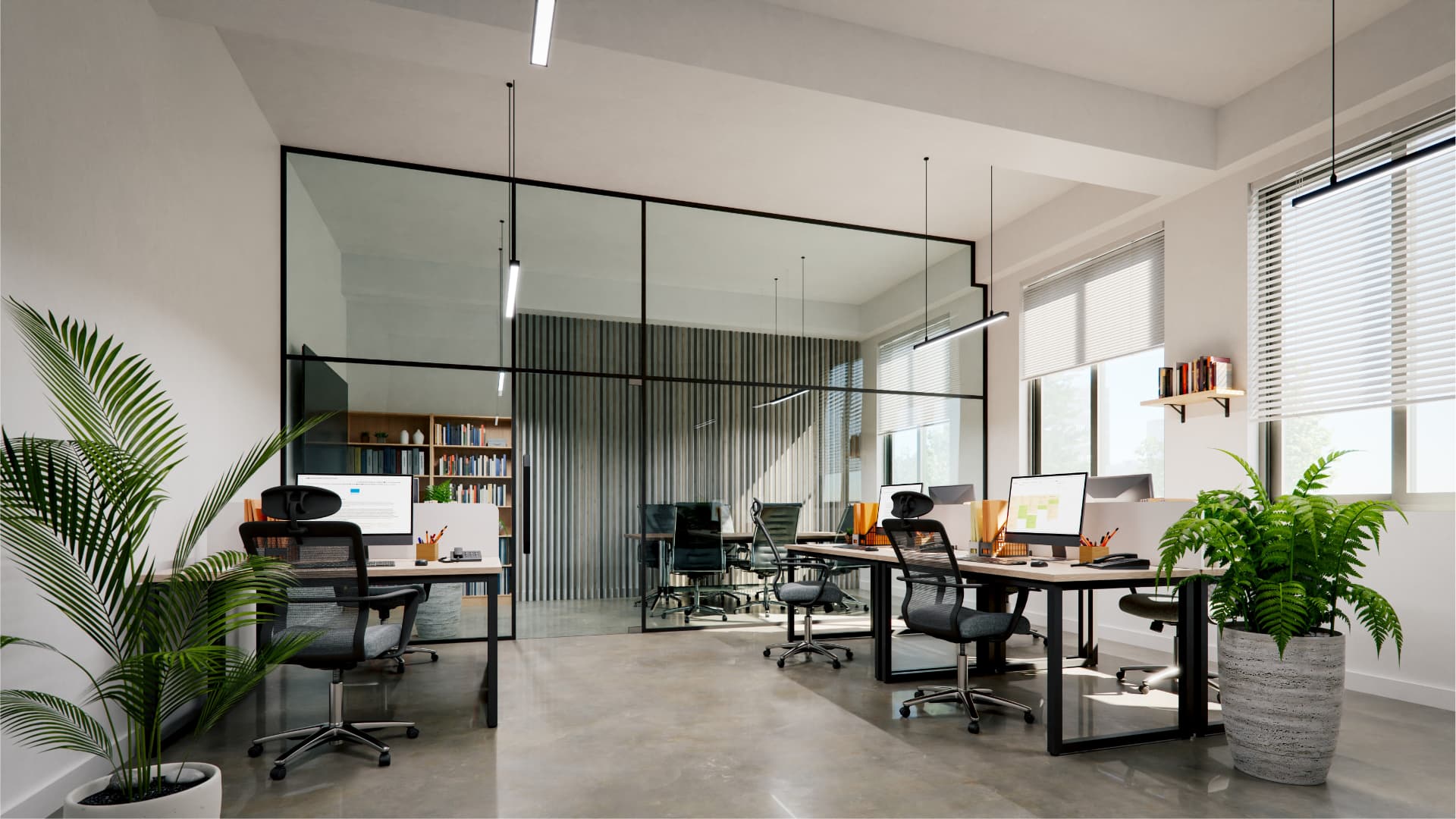
Bright, modern office with workstations, glass walls and green plants

What we hear most.

Four situations that are almost always about indoor climate.

  • The air gets stuffy after a few hours

    A typical sign of too little air change for the number of people in the room. The CO₂ level rises steadily through the morning, and concentration drops accordingly.

  • Headaches and fatigue in the meeting room

    Small rooms with many people and no ventilation quickly reach a CO₂ level where people become sluggish. It is rarely noticed, because the meeting ends before anyone makes the connection.

  • Some freeze, others sweat

    Drafts near windows, heat from south-facing facades and uneven distribution from the ventilation create large differences within the same room. The thermostat alone won't fix it.

  • Dry air, dust and irritated eyes

    Low humidity in winter, dust from textiles and old filters cause dry mucous membranes, itchy eyes and more frequent symptoms for people with allergies.

  • Tobacco smoke odor lingers in the room

    Smoke odor from clothing, smoking breaks and neighboring areas settles in textiles and is clearly noticed by colleagues and guests. Odor is a real indoor climate problem, and it requires a carbon filter — a particle filter alone won't remove it.

Our approach

We assess the need before we recommend a solution.

We start with the challenge in the room and, as needed, can measure relevant conditions on site or over time. Based on that, we assess whether the problem is best solved through ventilation, a change in how the room is used, service and filter changes, or supplementary air purification.

  1. 01

    We can measure over time when the task requires it

    CO₂, temperature and relative humidity can be logged over a normal workweek, so we see the pattern across the day instead of a single random reading.

  2. 02

    We compare with how the room is used

    Number of people, meeting activity and airing habits determine whether the problem is capacity, settings or behavior. That completely changes what the solution should be.

  3. 03

    We start with what costs nothing

    Adjusting operating hours, changing filters, moving workstations away from drafts and fixed airing routines surprisingly often solve a large part of the problems.

  4. 04

    We recommend equipment when it is needed

    If the air change really is too low, we point to air purification, humidification or supplementary ventilation — with a concrete estimate and a prioritized order.

CO₂ and air change

CO₂ tells you whether the supply of fresh air matches the number of people in the room. 1,000 ppm has traditionally often been presented as the line between good and poor indoor climate. However, the figure is not a universal health limit, but a practical benchmark for ventilation and perceived air quality. If needed, we can arrange measurements over a longer period to examine how the CO₂ level varies.
Temperature and drafts

For sedentary office work, a comfortable temperature is typically between 20 and 22 °C in winter and slightly higher in summer. Drafts often come from cold window surfaces or incorrect air supply — they feel like cold even when the room temperature is fine.

Humidity, dust and odor

In winter, humidity drops in heated rooms, bringing dry mucous membranes, static electricity and eye irritation. Dust from textiles, paper and old ventilation filters makes the symptoms worse — especially for people with allergies.

Air purification and supplementary ventilation

Where the building's ventilation can't keep up, an air purifier can reduce the concentration of particles in the individual room. The HEPA filter captures particles — this is not documentation of an effect against bacteria and viruses — and odor requires a carbon filter. Air purification does not supply fresh air and therefore does not replace airing, but it is often the realistic solution in leased premises.

CO₂ is an important indicator — but it doesn't tell the whole story

CO₂ is one of the most widely used measurements when the indoor climate is examined in offices and classrooms. The measurement can tell you something about how much fresh air is supplied relative to the number of people in the room. However, it does not necessarily tell you anything about the level of particles, VOCs, formaldehyde, ozone, NO₂ or other air pollutants. That is why it can be relevant to combine CO₂ measurement with measurement or assessment of other parameters — depending on the specific challenge.

Healthcare — clinics, dentists and treatment rooms

In treatment rooms, waiting rooms and clinics, the requirements for particle removal and odor reduction are higher than in an office, and the equipment must be able to run quietly while patients are in the room. We size the equipment to the room's volume and the operating setting actually used, and choose the filter based on whether the task is particles, odor or both.

Meeting rooms and small rooms

Meeting rooms are where the indoor climate fails first: many people, small volume and no airing along the way. A CO₂ monitor on the wall and a fixed routine for airing between meetings do more than any renovation.

Healthcare

Special experience with the healthcare sector.

We have special experience with indoor climate solutions for the healthcare sector and other environments with high demands for air quality, hygiene and operational reliability. In treatment rooms, waiting rooms and clinics, the requirements for particle removal and odor reduction are higher than in an office, and the equipment must run quietly while patients are in the room. We size the equipment to the room volume and the operating setting that is actually used, and we choose the filter based on whether the task is particles, odor or both.

Documentation

What research says about indoor climate.

We rely on the same sources as the rest of our advice: the National Research Centre for the Working Environment (NFA), the knowledge portal godtarbejdsmiljo.dk from BFA (the Danish sector working environment councils), and the rules of the Danish Working Environment Authority.

  • 1,000 ppm

    The CO₂ level is used as a benchmark for whether the air change is sufficient. If it stays above roughly 1,000 ppm, it indicates that the ventilation isn't keeping up with the number of people in the room. The figure is not a universal health limit.

    Danish Working Environment Authority · Ventilation and air quality at permanent workplaces

    See the source
  • Headaches and fatigue

    Poor indoor climate typically causes headaches, fatigue, difficulty concentrating and irritation of the eyes and airways — symptoms that go away again when you leave the room.

    godtarbejdsmiljo.dk · Indoor climate

    See the source
  • 20-22 °C

    For sedentary work, the temperature should generally be between 20 and 22 °C, and there must be no bothersome drafts. Large temperature differences within the same room are a strain in themselves.

    Danish Working Environment Authority · Temperature in work rooms at permanent workplaces

    See the source
  • APV requirement in Denmark

    Indoor climate is part of the physical work environment and must be assessed in the workplace assessment (APV) required by Danish law when employees experience problems. Measurements over a full workweek can be used directly as documentation.

    Danish Working Environment Authority · Workplace assessment (APV)

    See the source
  • Among the most common complaints

    In the survey Work Environment and Health in Denmark by the National Research Centre for the Working Environment (NFA), poor air quality and temperature problems are among the physical conditions most often cited by employees doing office work.

    NFA · Work Environment and Health in Denmark

    See the source

Industries

Where it makes a particular difference.

Indoor climate does not mean the same thing everywhere. Here are the workplaces where we are most often called in — and why.

  • Daycare centers and classrooms

    Many people per square meter means high CO₂, dry air and rapid spread of infection. Air purification and humidity control are often quicker to put in place than a ventilation upgrade.

  • Offices in crowded rooms

    Headaches and fatigue after lunch are rarely caused by the lunch. CO₂ levels, particles and dry air are the three parameters we can measure first.

  • Clinics and the healthcare sector

    Requirements for particle removal and odor reduction are high, and the equipment must run quietly in treatment rooms. Filter choice and placement determine the effect.

  • Manufacturing and workshops

    Dust, welding fumes and process vapors require stronger filtration than office environments. Here, the advice is about capacity, placement and filter changes.

Guide

Guide: how to choose the right air purifier.

Capacity, filter and placement determine the effect. Here is the order we use ourselves.

  1. 01

    Find the room volume

    Floor area times ceiling height gives the room volume. The required capacity is calculated from the room volume, the desired air change rate and the actual load in the room.

  2. 02

    Decide how many air changes you need

    Regular offices typically manage with 2-3 air changes per hour. Classrooms, waiting rooms and treatment rooms need more. Capacity should be measured at the quiet operating setting you will actually use.

  3. 03

    Choose the filter type based on the pollution

    A HEPA filter removes particles, dust and allergens. A carbon filter removes odors, tobacco smoke and volatile compounds (VOC). If you need both, the purifier must have both filters.

  4. 04

    Set a limit for the noise level

    An air purifier that is noisy gets switched off. Look at the dB figure at the setting that delivers the capacity you have calculated.

  5. 05

    Placement

    Placement has a big impact on air circulation and on the air purifier's effect. We help with strategic placement based on the room layout, air flows, sources of pollution and the areas where employees spend their time. We also advise on the choice between mobile and wall-mounted solutions.

  6. 06

    Include filter changes in the price

    A used filter makes the invisible visible. It shows how much dust and how many particles the air purifier has captured over time.

Equipment for indoor climate.

What we typically end up recommending — when the analysis points that way.

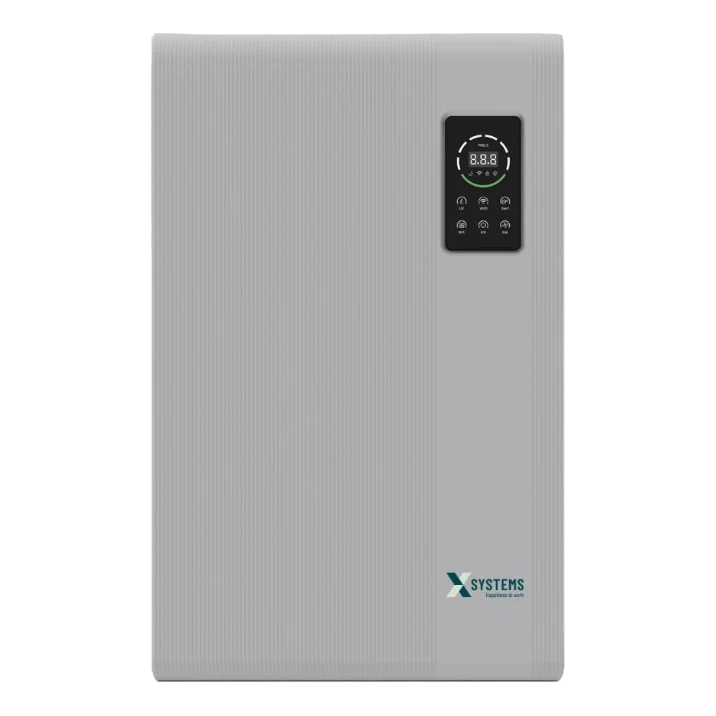
  • Pure Air Slim 487 — indoor climate from Xsystems

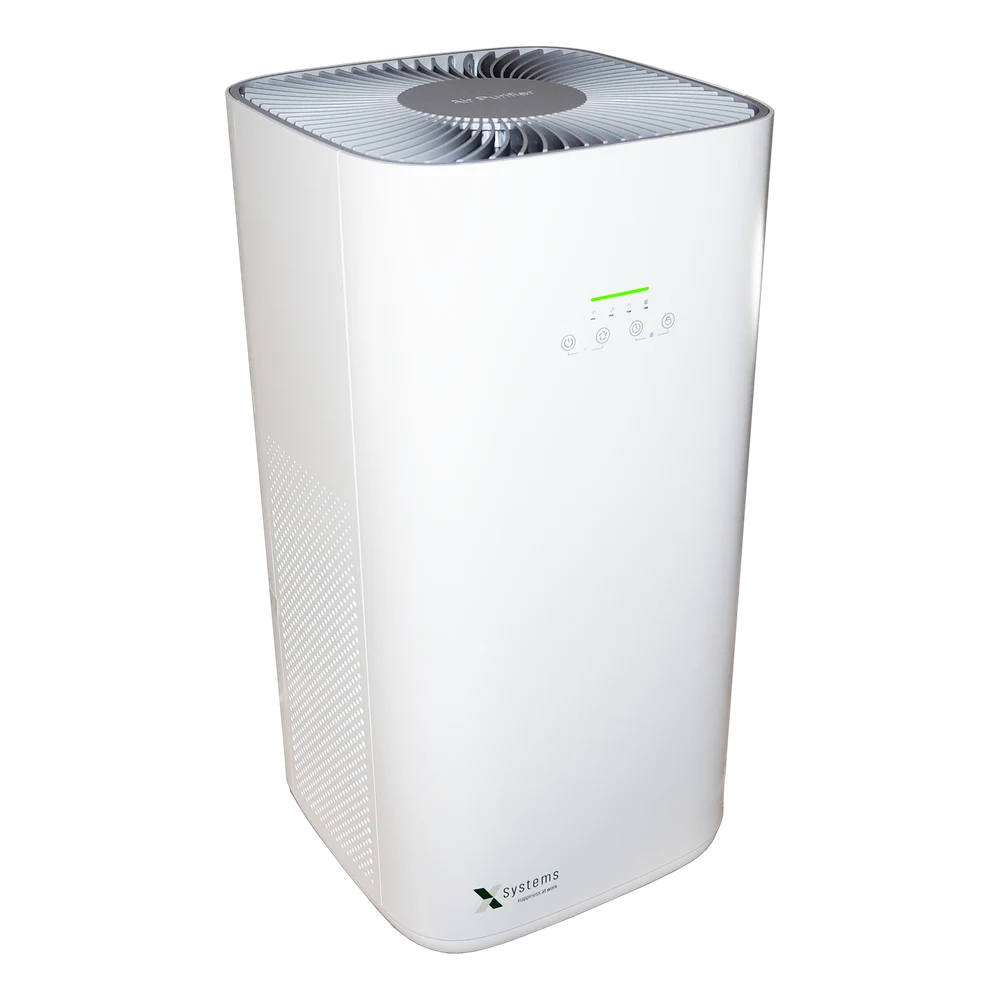
    Pure Air Slim 487

    • Cleans 487 m³ of air per hour
    • Covers approx. 97 m² at two air changes per hour
    • Six-stage filtration system
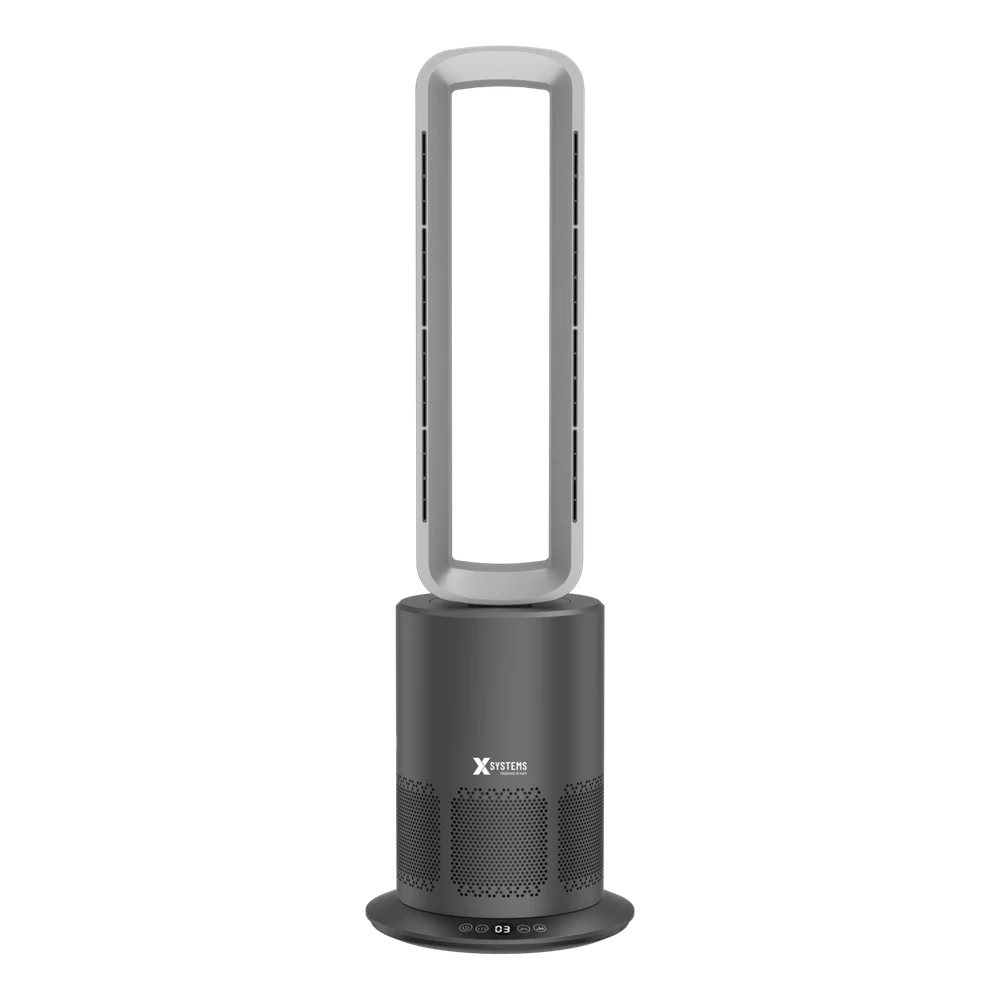
  • Pure Air Climate — indoor climate from Xsystems

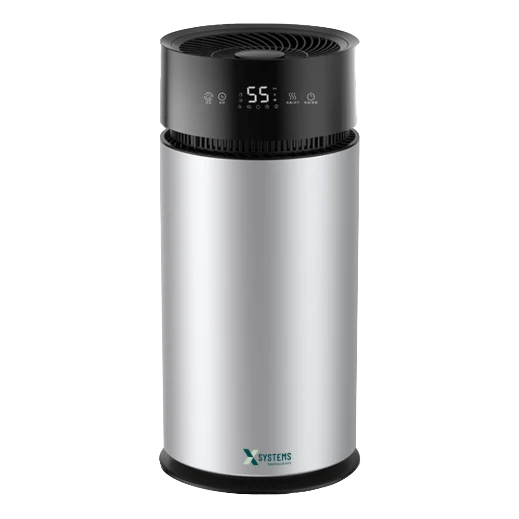
    Pure Air Climate

    • 3-in-1 climate solution: cooling, heating and air purification
    • Bladeless design for professional environments
  • Pure Mist Pro — indoor climate from Xsystems

    Pure Mist Pro

    • Ultrasonic humidifier with 10-liter capacity
    • Maintains optimal humidity
  • PureMist+ — indoor climate from Xsystems

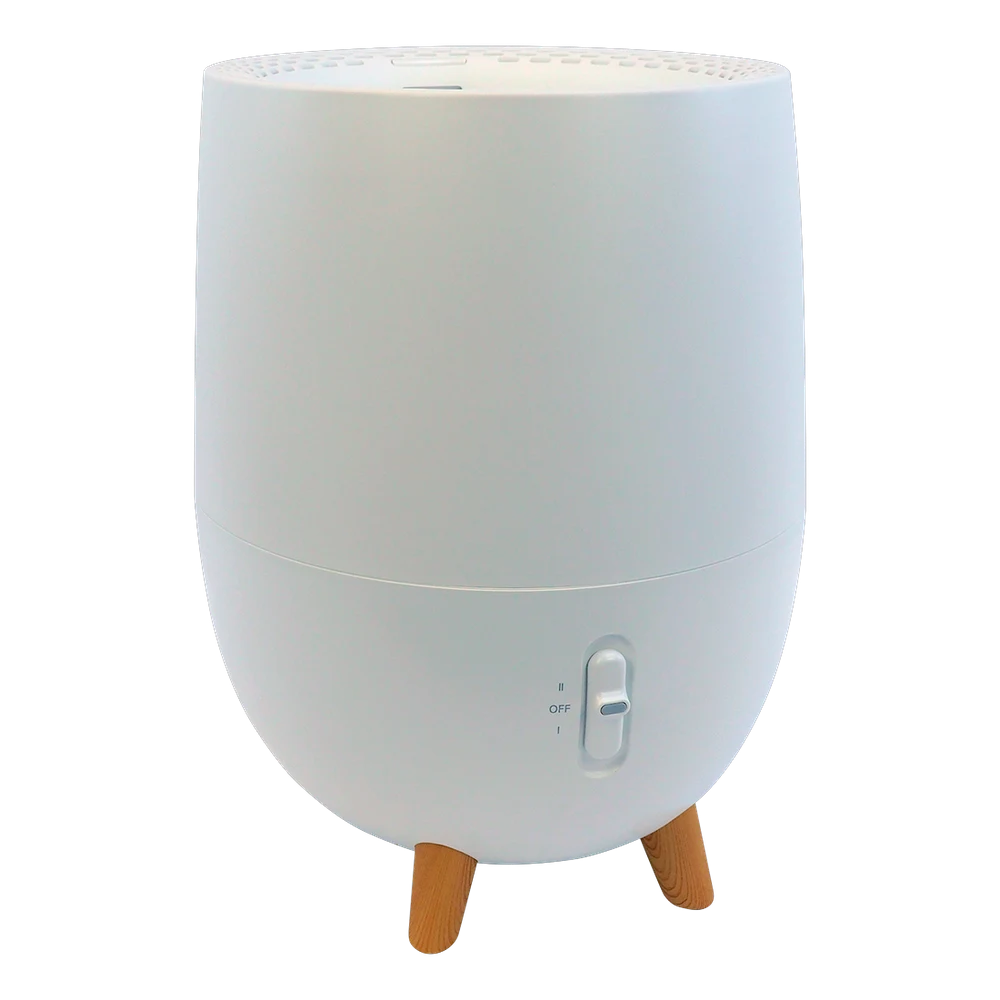
    PureMist+

    • Humidifier for rooms up to 30 m²
    • Counteracts dry air
  • Pure Air Medi 400 — indoor climate from Xsystems

    Pure Air Medi 400

    • Compact air purifier for rooms of approx. 74 m²
    • Draws in air from three sides

Typical process — example

Office floor with three meeting rooms.

Complaints about stuffy air and headaches, especially after lunch. We logged CO₂, temperature and humidity for a week. The largest meeting room peaked above 1,800 ppm within an hour, while the open-plan office was fine. Operating hours were corrected, filters were changed, and CO₂ monitors were installed in the meeting rooms. The figures below are a typical outcome — yours come from the analysis.

CO₂ in meeting room
1,800 → 900 ppm
Measurement period
5 days
For the first measures
DKK 0

CADR calculator.

CADR stands for Clean Air Delivery Rate and states how many cubic meters of purified air the air purifier delivers per hour. Together with the room volume and the desired number of air changes, CADR is used to choose the right capacity.

Calculate how much clean air the room needs. The formula is the room volume times the desired number of air changes per hour: area × ceiling height × air changes.

Room type

3 air changes per hour

Required capacity

324 m³/h

Room volume 108 m³ × 3 air changes per hour.

The calculation is for guidance only. Furnishing, ventilation and the shape of the room affect the result — we can measure it on site in a work environment analysis.

Compare air purifiers.

All figures come from the product sheets. CADR is measured on smoke and tells you how many cubic meters of clean air the unit delivers per hour.

Specification
Pure Air Slim 487
Pure Air Slim 487
Pure Air Medi 400
Pure Air Medi 400
Pure Air Climate
Pure Air Climate
CADR (smoke)487 m³/h372 m³/hNot stated
Recommended room sizeApprox. 97 m² (2 air changes/h, 2.5 m ceiling height)Approx. 74 m² (2 air changes/h, 2.5 m ceiling height)Up to 35 m² (manufacturer's recommendation)
HEPA filterHEPA H13HEPA H13HEPA H13
Activated carbon filterYes, activated carbon Yes Yes
UV-C Yes No No
Noise levelNight mode, 2 fans<28 dB / <65 dB26–55 dB
Power consumption76.6 W max. / 6.58 W recommendedMax. 40 W35 W (cooling) / 1950 W (heating)
TVOC reduction54.4 % after 30 min. (highest tested setting)43.0 % after 30 min. (highest tested setting)Not stated
App / remote controlYes, app and remote controlYes, app and automatic controlRemote control
Dimensions610 × 380 × 150 mm (5.9 kg)27 × 27 × 53 cm (5 kg)265 × 265 × 865 mm
Best forMedium-sized and larger offices, meeting rooms and classrooms, healthcare and nursing homes, where high capacity and the option of both floor and wall placement are wantedSmall and medium-sized offices, treatment rooms, patient rooms and nursing homes, where a compact floor model with app and automatic control is wantedSmall offices, treatment rooms, patient rooms, meeting rooms and lounges up to 35 m², where air circulation, heating and filtration in one solution are wanted

FAQ

Questions we get.

What is a good CO₂ level in the office?

Below roughly 1,000 ppm is a guideline. The figure is not a universal health limit, but a practical benchmark for ventilation and perceived air quality. If the level stays higher, the air change is typically too low for the number of people using the room — and insufficient ventilation lets bioeffluents, odors, particles and VOCs build up, which is often what people experience as stuffy air.

What is the right temperature in an office?

For sedentary work, 20-22 °C is a good starting point in winter. More important than the exact figure is that there are no drafts and that the temperature is roughly the same across the workstations.

Do air purifiers help?

They reduce particles, dust and odor in the individual room and have a noticeable effect where the ventilation can't be expanded. They don't supply fresh air, so they don't replace airing — they supplement it.

Can you use an air purifier together with mechanical ventilation or air conditioning?

Yes. An air purifier can be used together with both mechanical ventilation and air conditioning. Ventilation supplies fresh air and removes or dilutes part of the pollution in the room. At the same time, a correctly sized air purifier recirculates the room air through its filters and can thereby reduce particles, odors and other specific pollutants. Air conditioning mainly regulates the temperature, and the unit's standard filter is not necessarily designed to capture fine or ultrafine particles. Air purification can therefore be a relevant supplement. However, it does not replace necessary ventilation or the supply of fresh air. Placement and sizing must be adapted to the room's layout and to the ventilation system's supply and exhaust. Xsystems can help with that.

How long do you measure?

Typically a normal workweek. That gives a pattern across the day and week instead of a single reading that may happen to fall at a randomly good or bad time.

Should indoor climate be included in the workplace assessment (APV) under Danish rules?

Yes. Air quality, temperature and drafts are part of the physical work environment and must be assessed in the workplace assessment (APV) required by Danish law when employees experience problems. Our measurement data and written summary can be used directly as documentation.

What does it cost?

The work environment analysis is free and without obligation. Many of the first measures — operating hours, filter changes and airing routines — cost nothing. If equipment is needed, you get a total estimate.

Shall we measure your indoor climate?

Tell us briefly how many rooms and how many employees it involves, and a consultant will get back to you with a time.